

 Patient Portal


 301.810.3600

 North Bethesda, MD
 301.810.3600






My Bag (0)
Your bag is empty
Looks like you haven't added any products yet.


Most resurfacing lasers are limited to a single type of energy. Helix by DEKA takes a more customizable approach, combining fractional ablative CO₂ and non-ablative resurfacing technologies in one advanced platform. This versatility allows your dermatologist to tailor the depth, intensity, and type of resurfacing to your skin, your goals, and your desired downtime—rather than taking a one-size-fits-all approach.
At ICON Dermatology & Aesthetics, we offer all three Helix resurfacing protocols at our North Bethesda office, allowing us to customize treatment from gentle skin renewal to more intensive resurfacing.
Helix is a non-invasive, energy-based skin resurfacing device that delivers both CO2 and 1570nm laser energy. It supports three distinct protocols, and all three can be combined in a single session.
CoolPeel is the ablative CO2 protocol. Ablative CO2 lasers use a high-powered light beam to heat and vaporize the top layer of skin, removing tiny channels of tissue to stimulate new collagen while the heat tightens the skin. Helix’s ablative range runs from more intensive resurfacing for deep wrinkles and laxity through to CoolPeel, which delivers superficial resurfacing for fine lines and sun damage with little to no downtime.
Sultra is the non-ablative Helix protocol, using a 1570 nm wavelength to deliver controlled heat beneath the skin’s surface without removing the outer layers of skin. This thermal energy stimulates collagen remodeling to gradually improve skin texture, firmness, and overall quality. Sultra can be particularly helpful when additional skin tightening is a treatment goal, either on its own or in combination with Helix’s ablative technology. Results develop progressively, with less downtime than more aggressive ablative resurfacing.
FUSION blends both. Combining ablative and non-ablative energy in one session allows your dermatologist to target several depths and concerns at once, using proprietary CO2 and 1570nm blending patterns unique to Helix. It improves tone, elasticity, and texture by vaporizing selective superficial tissue while delivering energy deeper below the surface, and there are options safe for both light and dark skin types.

With its highly customizable treatment options, some form of Helix resurfacing is appropriate for almost everyone. Treatment settings and intensity are individually selected based on your skin type, specific concerns, treatment goals, and desired downtime. From gentle treatments with minimal recovery to more intensive resurfacing and combination protocols, our dermatologists can customize Helix to create a treatment that is right for you.
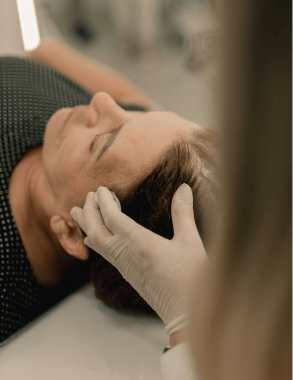
Treatment takes up to 60 minutes depending on the protocol and area, though patients typically arrive an hour early so topical numbing cream has time to work.
Older CO2 laser treatments often required oral sedation, pain medication, or local nerve blocks. Helix needs only topical numbing, supplemented by a Zimmer cold air device during treatment for comfort. Most patients find it considerably more tolerable than traditional CO2 resurfacing.


Expect mild redness and swelling for a few days, along with a sandpaper-like texture or a coffee-ground appearance for up to a week as the skin heals. Keeping the skin hydrated through this stage matters.
Avoid makeup, sunscreen, and active topical products for at least 24 hours. After that, mineral sunscreen is recommended and makeup may be used. Sleeping on a clean pillowcase with your head slightly elevated helps minimize swelling. Your dermatologist will provide a post-treatment regimen and confirm when you can resume your usual routine.
The epidermis takes roughly a week to turn over. As the treated surface layer falls away, texture, sun damage, age spots, pigmentation, and dullness all improve. Results continue developing over the following months and can last up to five years, though this varies with your starting point and how many sessions you have.
Some patients see the result they want after one treatment. Others need a series. Your dermatologist will recommend spacing based on your skin and the intensity selected, with annual treatments after that to maintain results.
Fractional laser technology is precise, which limits the risk of adverse effects, but no aesthetic treatment is risk-free. Uncommon side effects include burning, excessive redness, itching, and pain.
As with any laser treatment, there is a risk of post-inflammatory hyperpigmentation, particularly in darker skin types. Helix offers highly customizable treatment options that allow our dermatologists to carefully select the protocol and settings best suited to each patient’s skin. Depending on your individual risk factors, your dermatologist may recommend Sultra or FUSION rather than a fully ablative protocol and may require pretreatment with topical lightening agents to help minimize the risk of unwanted pigmentation. Careful patient selection, appropriate pretreatment, and individualized treatment settings are all part of our commitment to providing the safest and most effective treatment possible.
Helix’s versatility is one of its greatest advantages—but that versatility is most valuable in experienced hands. Choosing between ablative, non-ablative, and blended protocols, and determining the appropriate settings and intensity within each, requires careful clinical judgment based on your skin, treatment goals, and desired downtime.
At ICON Dermatology & Aesthetics, every Helix treatment is performed by providers with extensive experience using the technology. Our dermatologists have been performing Helix treatments for years and are highly experienced in customizing its protocols for a wide range of skin concerns and treatment goals. Dr. Pellicane has also served as a national physician trainer for advanced Helix protocols, educating other physicians on advanced techniques and treatment optimization.
Just as importantly, having expertise in multiple technologies allows us to recommend the treatment that is best suited to you—not simply the device you initially came in asking about. Depending on your goals, we may recommend a different approach, such as Clear + Brilliant for a gentler treatment, Virtue RF Microneedling when collagen remodeling and tightening are the priority, or the Ultimate Duo when both resurfacing and collagen stimulation would be beneficial.
Considerably less so than traditional CO2 laser treatment. No oral or injectable anesthesia is required. We apply topical numbing cream for up to 60 minutes beforehand and use a cold air device during treatment.
Up to 60 minutes depending on the protocol and area treated, plus about an hour beforehand for numbing.
Mild redness and swelling for a few days, with a rough, sandpaper-like texture for up to a week. Most patients return to normal activity quickly, with sun protection and a modified skincare routine during healing.
Results develop over several months and can last up to five years, depending on your skin and the number of sessions you have. Annual maintenance treatments are typical.
Yes. Helix can be safely used across all skin types, including darker skin tones, but careful treatment planning is essential. The appropriate protocol, settings, and intensity must be selected for each patient, along with individualized pre- and post-treatment skincare when indicated. Our dermatologists carefully assess your skin type, pigmentation risk, and treatment goals to customize your treatment and minimize the risk of complications such as post-inflammatory hyperpigmentation.
Some patients see the result they want after one session, others need a series. It depends on your concerns, your healing, and the intensity of the protocol selected.
To learn what Helix could do for your skin, contact ICON Dermatology at (301) 810-3600 to schedule a consultation with one of our board-certified dermatologists.
Have a question about a treatment, or not sure where to start? Send us a note and we will help you find the right next step.
Looks like you haven't added any products yet.