

 Patient Portal


 301.810.3600

 North Bethesda, MD
 301.810.3600





My Bag (0)
Your bag is empty
Looks like you haven't added any products yet.


Eczema is not one condition. It is a family of inflammatory skin conditions with different causes, and the treatment that controls one type may do nothing for another. That is why identifying the source of your dermatitis is the first step rather than an optional one. Once a dermatologist at ICON Dermatology & Aesthetics in North Bethesda has identified the cause, we can build a plan around trigger avoidance and carefully selected medications to combat the inflammation.
Atopic dermatitis is the most common form and often begins in childhood. It tends to run in families alongside asthma and hay fever, and it typically appears in the creases of the elbows and knees, on the hands, and on the face and neck.
Contact dermatitis is caused by something touching the skin. Irritant contact dermatitis comes from repeated exposure to something harsh, such as frequent hand washing or a cleaning product. Allergic contact dermatitis is an immune reaction to a specific substance, with nickel, fragrance, and preservatives in personal care products among the most common culprits.
Dyshidrotic eczema produces small, intensely itchy blisters on the palms, sides of the fingers, and soles of the feet.
Nummular eczema appears as coin-shaped patches, often on the arms and legs, and is frequently mistaken for a fungal infection.
Seborrheic dermatitis affects oil-rich areas including the scalp, eyebrows, and sides of the nose, producing redness and flaking. If your scalp is affected, our HairSanity line was developed by Dr. Rebecca Kazin specifically for scalp health and flaking.
Identifying the source of your dermatitis is an important first step. Your dermatologist will take a history covering where the rash appears, what makes it better or worse, what you use on your skin, and what you are exposed to at work and at home. Location alone is often informative, since contact dermatitis tends to appear exactly where the trigger touches.
When an allergic cause is suspected, patch testing can identify the specific substance responsible. That matters because avoidance is the only definitive treatment for allergic contact dermatitis, and you cannot avoid something you have not identified.
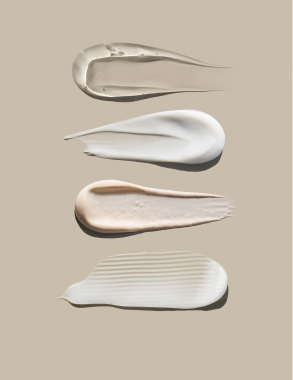
Treating eczema requires tending to your skin on a daily basis rather than only during flares. Mild cleansers and non-fragranced moisturizing creams formulated for sensitive skin are important for maintaining the skin between flare-ups, and applying moisturizer while the skin is still damp after bathing helps hold water in.
Prescription topical anti-inflammatory medications are used when the skin becomes aggravated. These are the mainstay of treatment for most patients, and using yours properly during a flare works better than using it sparingly over a long stretch.
More severe forms of eczema sometimes require systemic medications, treatments that work throughout the entire body, in the form of oral pills or injections. These have improved considerably in recent years, and severe eczema that once had few good options now has several.
Eczema increases your risk of skin infection if it is not well controlled. Skin that is cracked and inflamed loses its barrier function, and scratching introduces bacteria.
Watch for increasing pain, warmth, swelling, yellow crusting, or pus, and for a flare that suddenly worsens rather than settling. Contact us promptly if you notice any of those, since an infected flare needs different treatment than a routine one.

Board-certified dermatologists Drs. Pellicane and Kazin and board-certified physician assistant Jennifer Whitman, PA-C, are dedicated to providing personalized care with the latest dermatological treatments. Their combined expertise ensures every patient receives tailored solutions for healthy, radiant skin.
Eczema is one of the conditions people most often manage alone for years with drugstore products, and it is also one where a correct diagnosis changes everything. Contact dermatitis from a product you use daily will not respond to any amount of moisturizing until you know what the trigger is and stop using it.
Our dermatologists distinguish between the types, use patch testing when an allergic cause is suspected, and have access to the full range of treatment from topicals through to modern systemic options for severe disease. We will also be honest with you about what maintenance looks like, because eczema is managed rather than cured. Related inflammatory conditions such as psoriasis are treated here as well, and telling them apart is part of the assessment. For daily maintenance, our skincare products include gentle, fragrance-free options.
Eczema is managed rather than cured. With the right diagnosis and a consistent routine, most patients get to a point where flares are infrequent and easily controlled.
The terms are often used interchangeably. Dermatitis means inflammation of the skin, and eczema refers to a group of inflammatory skin conditions within that category.
No. Eczema cannot be passed from one person to another, though an eczema flare that becomes infected involves bacteria that can spread.
Patch testing identifies which specific substances your skin reacts to. It is used when allergic contact dermatitis is suspected, and it matters because avoiding the trigger is the definitive treatment.
Stress does not cause eczema, but it is a well-recognized aggravating factor and can trigger or worsen a flare in people who already have it.
Watch for increasing pain, warmth, swelling, yellow crusting or pus, or a flare that abruptly worsens. Contact us promptly if any of those appear.


If your eczema is not under control or you have not identified what is triggering it, contact ICON Dermatology at (301) 810-3600 to schedule an appointment with a member of our board-certified team.
Have a question about a treatment, or not sure where to start? Send us a note and we will help you find the right next step.
Looks like you haven't added any products yet.